Buyer's guide / AI PCs & local LLMs
Best AI PC for running LLMs locally (2026)
Cloud AI is a subscription; a local AI PC is a one-time box that keeps your data private and runs 70B-class models in near silence. Unified memory decides which models fit and bandwidth decides how fast they run — here are the tiers that matter, from a 16 GB on-ramp to a 128 GB NVIDIA GB10 box.
By Evan Cole · Last updated July 17, 2026
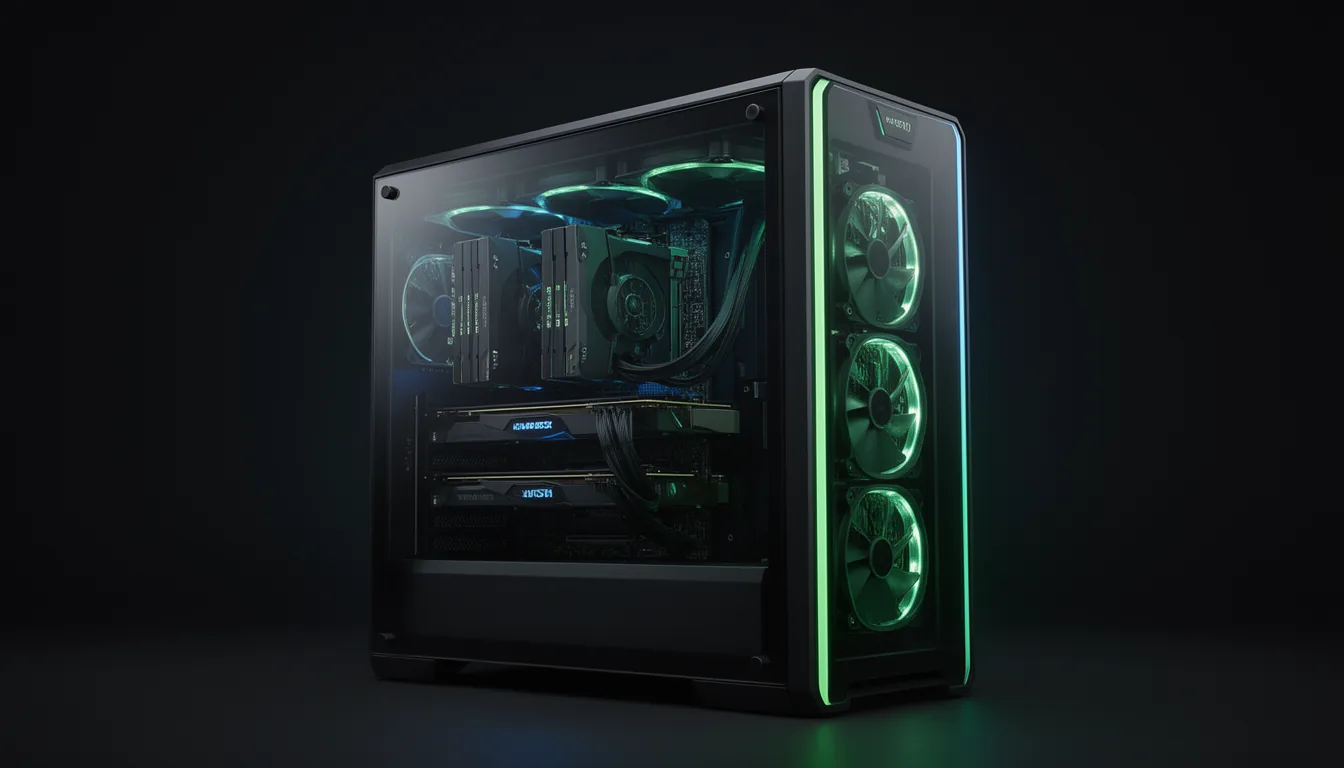
People are done renting their AI. Every cloud model is a recurring bill and a stranger holding your prompts, and the hardware to escape that has finally become a single quiet desktop instead of a multi-GPU tower. The reason is unified memory: on these machines the CPU and GPU share one large pool, so a ~65–200 W box can hold a 70B-parameter model entirely in memory. That's the whole category — a computer that runs a serious large language model locally, offline, and privately.
Two numbers decide everything here, and neither is the one the marketing leads with. Unified-memory capacity sets which models fit; memory bandwidth sets how fast they run. The NPU “TOPS” figure on the box is almost irrelevant for large-model text generation. We rank by the two that matter, and we're explicit about availability and price: these are niche machines where third-party resellers inflate Amazon buy-box prices, so we flag it every time.
This guide was produced with AI assistance as part of VerdictBits's research workflow. Every spec, price, and Amazon listing was cross-checked against primary sources before publication; where a figure comes from an independent tester, we say so, and where availability or price is volatile, we tell you to re-check before buying.
The picks at a glance
The verdict, at a glance
Best overall local-AI supercomputer
The CUDA-native “AI supercomputer on your desk” — 128 GB unified plus NVIDIA's DGX software stack, and one of the few GB10 boxes actually on Amazon.
Best big-model value (128 GB)
It buys 128 GB of unified memory (up to 96 GB as VRAM) — the cheapest way to load 70B–120B-class models that a 24 GB GPU simply cannot hold.
Best Amazon-sold mini-PC
ServeTheHome's pick of the Ryzen AI Max minis, and the 64 GB SKU is genuinely Amazon-sold — the cleanest Strix Halo buy on Amazon.
Best turnkey / fastest on Amazon
The fastest, quietest turnkey local-LLM box you can order on Amazon today — up to 546 GB/s and 128 GB unified, plug in and run.
Best value turnkey
The sweet-spot “70B-ish at home” turnkey for people who want macOS + MLX without workstation pricing — 273 GB/s in a mini.
Best budget entry
The honest entry tier: the cheapest credible on-ramp to local AI — great for 7B–14B models and learning, not for 70B.
Why unified memory and bandwidth decide it — not TOPS
Generating text with a large language model is a memory-bandwidth-bound workload. For every token, the machine reads the entire set of model weights out of memory and does a relatively small amount of arithmetic on them. The arithmetic is cheap; the memory read is the bottleneck. So the NPU's headline “TOPS” rating — a measure of raw arithmetic throughput, and in practice unused by mainstream LLM runtimes, which run on the GPU — tells you very little about how fast a 70B model will actually answer.
What does decide it:
- Unified-memory capacity determines which models fit. A 70B model at 4-bit quantisation weighs roughly 40–45 GB; if it doesn't fit in the machine's memory it won't load at all. 64 GB runs 70B Q4 comfortably; 128 GB reaches 70B at Q8 or a ~120B mixture-of-experts model at Q4. This is the single most important thing to get right at purchase time.
- Memory bandwidth (GB/s) determines how fast the machine streams those weights during generation. It is the primary driver of tokens-per-second. This is why an Apple Mac Studio at 546 GB/s answers a 70B model markedly faster than a GB10 or Strix Halo box at ~256–273 GB/s, even though all three hold the model comfortably.
The practical upshot: capacity-per-dollar favours AMD's Ryzen AI Max machines, raw speed favours Apple's high-bandwidth chips, and the software ecosystem — CUDA and the DGX stack — favours NVIDIA's GB10 boxes. Which of those three you weight most is what picks your machine.
The tiered picks
1. ASUS Ascent GX10 — Best overall local-AI supercomputer
— VerdictBits editorial score (local-AI suitability)
Reasons to buy
- Full 128 GB unified memory + genuine CUDA / DGX OS ecosystem
- Cheapest on-Amazon GB10 entry (1 TB config)
- Two units can be linked for larger models
- ~1 PFLOP FP4 GPU for prototyping, not just inference
Reasons to avoid
- 273 GB/s caps token speed (~3–4 tok/s on a 70B dense model)
- Thin Amazon stock and price swings
- Overkill unless you specifically want the NVIDIA stack
Check current price on Amazon →
Silicon: NVIDIA GB10 Grace-Blackwell — Memory: 128 GB LPDDR5X unified — Bandwidth: 273 GB/s
Best for: 70B dense / ~200B MoE at Q4, on the CUDA + DGX OS stack. Workstation-class — The most affordable on-Amazon GB10 box; buy it for capacity + NVIDIA software, not raw speed.
2. Beelink GTR9 Pro — Best big-model value (128 GB)
— VerdictBits editorial score (local-AI suitability)
Reasons to buy
- 128 GB unified — runs models a 24 GB GPU can't touch
- Roughly matches the pricier GB10 boxes on 70B throughput (~5 tok/s)
- Dual 10GbE networking
- Windows or Linux, standard tooling (Ollama, LM Studio, llama.cpp)
Reasons to avoid
- Amazon buy-box is often a reseller markup well above the direct price — check the seller
- The Amazon config ships a Crucial SSD — the consumer line Micron announced it was exiting, with shipments ending around February 2026 — but both M.2 slots are user-accessible, so the drive is replaceable
- No NVIDIA CUDA stack; the XDNA2 NPU is unused by mainstream LLM runtimes
- ~256 GB/s bandwidth caps large-model speed
Check current price on Amazon →
Silicon: AMD Ryzen AI Max+ 395 — Memory: 128 GB LPDDR5X-8000 unified (≤96 GB → GPU) — Bandwidth: ~256 GB/s
Best for: 70B–120B-class models a 24 GB GPU cannot hold. Upper mid — Cheapest path to 128 GB unified — but the Amazon buy-box is reseller-inflated; verify the seller.
3. Minisforum MS-S1 Max — Best Amazon-sold mini-PC
— VerdictBits editorial score (local-AI suitability)
Reasons to buy
- Sold by Amazon, not a markup reseller
- Dual 10GbE + USB4 v2 + a real PCIe x16 slot
- Strong independent review pedigree
- 64 GB comfortably runs 70B at Q4
Reasons to avoid
- 128 GB config is Minisforum-store only
- ~256 GB/s bandwidth — capacity beats speed here
- Ryzen AI Max, like all Strix Halo, has no CUDA ecosystem
Check current price on Amazon →
Silicon: AMD Ryzen AI Max+ 395 — Memory: 64 GB LPDDR5X-8000 (128 GB via Minisforum) — Bandwidth: ~256 GB/s
Best for: 70B at Q4 with 10GbE + a real PCIe x16 slot. High — ServeTheHome's pick of the Strix Halo minis; genuinely Amazon-sold, not a markup reseller.
4. Apple Mac Studio (M4 Max) — Best turnkey / fastest on Amazon
— VerdictBits editorial score (local-AI suitability)
Reasons to buy
- 410–546 GB/s — roughly 2× the mini-boxes' bandwidth
- Up to 128 GB unified; MLX ecosystem is polished
- Near-silent and low-power for the performance
- No setup — macOS runs local models out of the box
Reasons to avoid
- 128 GB config is a steep configure-to-order upgrade
- Apple pricing on Amazon can run over Apple.com MSRP
- For the very largest models, the M3 Ultra (819 GB/s, up to 512 GB) is faster — but it's Apple-direct, not really on Amazon
Check current price on Amazon →
Silicon: Apple M4 Max — Memory: 36–128 GB unified — Bandwidth: 410–546 GB/s
Best for: 70B dense fast; the quietest plug-and-run local-LLM box. High — ~2× the mini-boxes' bandwidth; polished MLX ecosystem, near-silent, low-watt.
5. Apple Mac mini (M4 Pro) — Best value turnkey
— VerdictBits editorial score (local-AI suitability)
Reasons to buy
- 273 GB/s — same bandwidth class as the GB10 boxes
- 48 GB config handles 32B comfortably, 70B Q4 tight
- Tiny, silent, sips power
- On Amazon, no configuration headaches
Reasons to avoid
- 48 GB is the practical ceiling — no 120B-class models
- Amazon prices run over Apple's MSRP
- macOS-only if your workflow needs Linux/CUDA
Check current price on Amazon →
Silicon: Apple M4 Pro — Memory: 24–48 GB unified — Bandwidth: 273 GB/s
Best for: 32B comfortably, 70B Q4 tight — macOS + MLX without workstation pricing. Mid — Same 273 GB/s as the GB10 boxes at a fraction of the price; tiny and silent.
6. Apple Mac mini (M4) — Best budget entry
— VerdictBits editorial score (local-AI suitability)
Reasons to buy
- Cheapest credible local-AI machine
- 120 GB/s + MLX runs 7–8B models briskly
- Silent, tiny, and a capable everyday desktop too
- On Amazon; easy first step
Reasons to avoid
- 16–24 GB ceiling — 7B–14B only, no serious large models
- 120 GB/s is entry-class bandwidth
- You'll outgrow it fast if local AI becomes a daily tool
Check current price on Amazon →
Silicon: Apple M4 — Memory: 16–24 GB unified — Bandwidth: 120 GB/s
Best for: 7B–14B models and learning — the cheapest credible on-ramp. Entry — Great to dabble in local AI; do not expect 70B — the memory ceiling is the limit.
Also worth considering (not on Amazon)
Two of the best machines in this category aren't sold on amazon.com, so they sit outside the ranked picks — but they're worth knowing about:
- Framework Desktop (Ryzen AI Max+ 395) — arguably the best-built Strix Halo box, up to 128 GB unified, but sold direct only. Buy direct from Framework→
- HP Z2 Mini G1a (Ryzen AI Max+ Pro 395) — the workstation-grade option with ECC LPDDR5X-8533 (the fastest memory of the AMD group) and vendor support, sold direct by HP. Its Amazon listings are third-party and heavily inflated, so buy it from HP directly rather than the marketplace. Buy direct from HP→
- Apple Mac Studio (M3 Ultra) — if you want the outright fastest turnkey box (819 GB/s) and the largest memory (up to 512 GB, enough for the very biggest open models), the M3 Ultra is it, but it's effectively Apple-direct. For most buyers the on-Amazon M4 Max above is the right Studio.
AI PC comparison: memory, bandwidth, and model fit
| Machine | Silicon | Unified memory | Bandwidth | Best for | Price tier |
|---|---|---|---|---|---|
| ASUS Ascent GX10 | NVIDIA GB10 Grace-Blackwell | 128 GB LPDDR5X unified | 273 GB/s | 70B dense / ~200B MoE at Q4, on the CUDA + DGX OS stack | Workstation-class |
| Beelink GTR9 Pro | AMD Ryzen AI Max+ 395 | 128 GB LPDDR5X-8000 unified (≤96 GB → GPU) | ~256 GB/s | 70B–120B-class models a 24 GB GPU cannot hold | Upper mid |
| Minisforum MS-S1 Max | AMD Ryzen AI Max+ 395 | 64 GB LPDDR5X-8000 (128 GB via Minisforum) | ~256 GB/s | 70B at Q4 with 10GbE + a real PCIe x16 slot | High |
| Apple Mac Studio (M4 Max) | Apple M4 Max | 36–128 GB unified | 410–546 GB/s | 70B dense fast; the quietest plug-and-run local-LLM box | High |
| Apple Mac mini (M4 Pro) | Apple M4 Pro | 24–48 GB unified | 273 GB/s | 32B comfortably, 70B Q4 tight — macOS + MLX without workstation pricing | Mid |
| Apple Mac mini (M4) | Apple M4 | 16–24 GB unified | 120 GB/s | 7B–14B models and learning — the cheapest credible on-ramp | Entry |
For the numbers behind these picks — unified memory, bandwidth, the biggest model each machine can hold, and measured tokens-per-second — see our 2026 AI PC benchmark and local-LLM speed comparison.
How we picked
We rated each machine on local-AI suitability, not general desktop performance: unified-memory capacity (which models fit), memory bandwidth (how fast they run), software ecosystem (CUDA/DGX vs MLX vs generic Windows/Linux tooling), and honest value at real street prices. Throughput figures are drawn from independent testers (ServeTheHome, Level1Techs, LMSYS, and community results), using different quantisations and frameworks — so we present them as directional ranges, not a single controlled chart. Throughput figures are cited from independent measurements. Every Amazon listing linked here was verified live against the product name; because reseller markups are rife on these niche machines, re-check the seller and price before you buy.
The bottom line
If you want the NVIDIA software stack and a real “AI supercomputer” on your desk, the ASUS Ascent GX10 is the most affordable GB10 box on Amazon. If you want to load the biggest models for the least money, a 128 GB Ryzen AI Max machine is unbeaten on capacity-per-dollar — just verify the seller. And if you want speed and zero setup, the Mac Studio M4 Max is the fastest turnkey box on Amazon, with the Mac mini M4 Pro the value pick and the entry Mac mini the honest place to start. Whichever you choose, buy for unified-memory capacity first and bandwidth second — and remember that if your AI use is only occasional, cloud rental may still be the cheaper answer.
Building a discrete-GPU tower instead of a unified-memory box? Pair this with our best GPU for local AI and best CPU for AI and local LLMs guides — the latter explains when the processor actually matters and when to just spend the money on VRAM.
Frequently asked questions
What is an “AI PC” for running LLMs locally?
In this guide it means a compact desktop built to run large language models on your own hardware, with no cloud subscription. Three silicon families dominate in 2026: NVIDIA's GB10 “DGX Spark”-class boxes (128 GB unified, CUDA/DGX OS), AMD's Ryzen AI Max+ 395 “Strix Halo” mini-PCs (up to 128 GB unified at a much lower price), and Apple's M4-family Macs (unified memory up to 546 GB/s on the Mac Studio M4 Max). What they share is unified memory: the CPU and GPU address one large pool, so a quiet ~65–200 W desktop can now hold a 70B model that used to require a multi-GPU tower.
How much memory do I need to run a 70B model locally?
At 4-bit quantisation (Q4), a 70B model needs roughly 40–45 GB of memory, plus headroom for the context/KV-cache. On a unified-memory machine that means a 64 GB config runs 70B Q4 comfortably; 128 GB gives you 70B at Q8 or a ~120B mixture-of-experts model at Q4. A rough rule: Q4 costs about 0.55–0.6 GB per billion parameters, Q8 about 1.1 GB per billion, then add 10–20% for context. Note that a 128 GB machine does not fit every model — a 235B MoE at Q4 is roughly 132 GB and will not load.
Do the NPU “TOPS” numbers matter for local LLMs?
Mostly no. Marketing highlights figures like “50 TOPS” (Ryzen AI Max), “48 TOPS” (Intel Lunar Lake) or platform totals over 100 TOPS, but token generation for large models is memory-bandwidth-bound and mainstream runtimes (llama.cpp, Ollama, MLX) run on the GPU, not the NPU. The NPU helps with lightweight, latency-sensitive on-device features (background blur, small vision models, Copilot+ effects) — not with how fast a 70B model generates text. Judge a local-AI machine by unified-memory capacity (which models fit) and memory bandwidth (how fast they run), not by TOPS.
Which is faster on a 70B model — GB10, Ryzen AI Max, or an Apple Mac?
On a Llama-3 70B dense model, the mini-boxes cluster together: the NVIDIA GB10 (273 GB/s) and Ryzen AI Max Strix Halo (~256 GB/s) both land around 3–5 tokens/second in independent tests. A 64 GB M4-class Mac (273 GB/s on the M4 Pro) does roughly 7–10 tok/s, and only Apple's highest-bandwidth chips pull clearly ahead — the Mac Studio M4 Max at 410–546 GB/s, and the Apple-direct M3 Ultra at 819 GB/s (~16–20+ tok/s). In short: capacity-per-dollar favours Strix Halo, raw speed favours Apple's big-bandwidth chips, and the software ecosystem favours NVIDIA. These figures come from independent testers using different quants and frameworks, so treat them as directional, not a single apples-to-apples chart.
Is a local AI PC actually cheaper than paying for cloud AI?
It depends on how heavily you use it. If you run inference continuously — a coding assistant all day, batch jobs, an always-on local agent — owning the hardware pays off, and you also keep your prompts and data fully private and on-device. But if your usage is occasional, renting a cloud GPU by the hour or paying per token is often still cheaper than buying a machine outright, and you avoid the maintenance. The strongest non-cost reasons to buy are privacy and independence from subscription pricing; the cost case only closes at high, sustained utilisation.
Why aren't more of these on Amazon?
The category is new and supply-constrained. The NVIDIA GB10 boxes (DGX Spark and partners like the ASUS Ascent GX10) launched in late 2025 and are still thin on stock; several — Dell, Acer, Lenovo, HP's GB10 units — sell only through their own stores or business channels, not amazon.com. Some of the best-built Ryzen AI Max machines (notably the Framework Desktop) are direct-sale only. Where a machine isn't on Amazon we say so and link the vendor; and because third-party resellers inflate Amazon buy-box prices on these niche systems, always check who is selling and compare against the vendor's own price before buying.
Related buyer's guides
All reviews →Buyer's guide / AI PCs
Best CPU for AI and local LLMs (2026)
The honest version: for pure GPU inference the CPU barely matters — so this guide is organised by when it does. Consumer value, the Intel option, unified-memory APUs that hold models a GPU can't, and the workstation platform you only need for multi-GPU rigs.
6 picks →
Benchmark / AI PCs
AI PC benchmark: local-LLM speed and memory (2026)
How the 2026 AI PCs compare for running local LLMs: unified memory, memory bandwidth, NPU TOPS, the biggest model each can hold, and measured tokens per second.
Read the benchmark →
Buyer's guide / AI PCs
LLM VRAM calculator
Enter a model size, quantization and context length to estimate the VRAM or unified memory an LLM needs to run locally — and instantly see which 2026 machines can hold it.
Use the calculator →
Buyer's guide / AI PCs
How to run LLMs locally: the 2026 hardware guide
How much VRAM or unified memory you need to run 7B-120B models locally, the capacity-vs-bandwidth tradeoff, and the 2026 hardware that hits each point on the curve — GB10, Ryzen AI Max, Apple Silicon and RTX GPUs.
Read the guide →
Buyer's guide / AI PCs
Mac vs PC for running local LLMs (2026)
It's not Mac vs PC — it's capacity vs speed. A Mac's unified memory fits models a PC GPU can't hold; a PC GPU runs the models that fit far faster. A sourced head-to-head plus which to buy.
Read the comparison →
Buyer's guide / AI PCs
DGX Spark vs Strix Halo vs Mac Studio (2026)
Three ways to run a 70B model on one quiet desktop - NVIDIA's CUDA GB10 box, AMD's cheap-and-big Strix Halo, and Apple's high-bandwidth Mac Studio. The head-to-head comes down to memory bandwidth, with measured tok/s and a verdict by use case.
Read the comparison →