Buyer's guide / CPUs
AMD vs Intel for gaming 2026: which CPU should you buy?
AMD's X3D chips win gaming in 2026 - decisively at 1080p. But the honest answer depends on your resolution: at 4K the gap nearly vanishes. Here's the sourced verdict, the current chips, and how to match your CPU to your GPU and monitor.
By Evan Cole · Last updated July 17, 2026
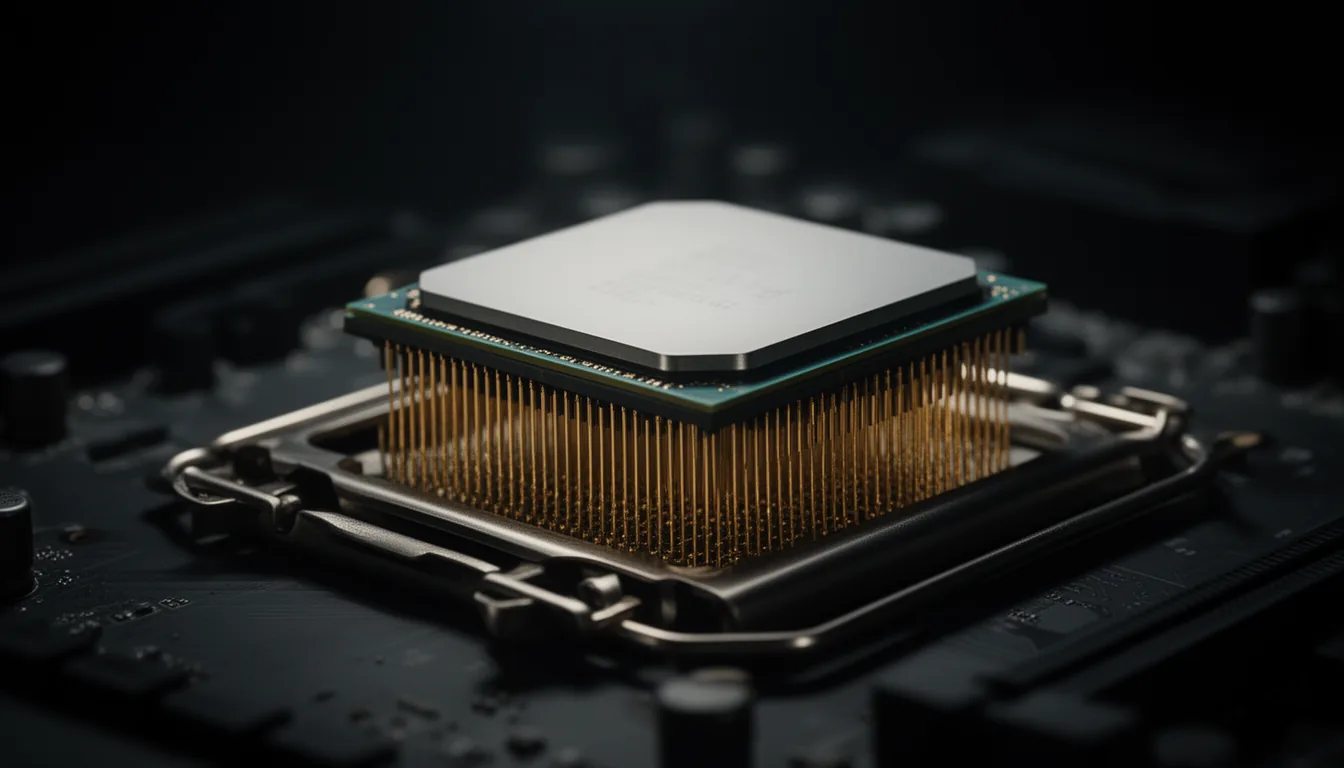
The 2026 lineup at a glance
| Chip | Side | Role | Notes |
|---|---|---|---|
| Ryzen 7 9850X3D | AMD (AM5) | Current gaming flagship | ~4% over the 9800X3D, at a higher tier |
| Ryzen 7 9800X3D | AMD (AM5) | Best value gaming | The price/performance king |
| Ryzen 9 9950X3D | AMD (AM5) | Do-it-all | Top gaming + 16-core productivity |
| Core Ultra 7 270K Plus | Intel (LGA 1851) | Intel value / refresh | Arrow Lake Refresh; strong mixed use |
| Core Ultra 9 285K | Intel (LGA 1851) | Intel productivity flagship | 24-core; trails X3D in games |
AMD's chips sit on AM5 (supported through 2029 — drop-in Zen 6/7 later); Intel's sit on LGA 1851, which is end-of-line (Nova Lake moves to a new socket). We do not print prices — they move week to week, so the links go to live listings.
Gaming performance: how big is the gap, really?
AMD's 3D V-Cache is the whole story. Stacking ~96 MB of L3 cache on the chip (versus ~36 MB on a comparable Intel part) keeps game data close to the cores, which raises frame rates and 1% lows. The measured result, at 1080p with a flagship GPU:
- The Ryzen 7 9800X3D was ~24% faster on average than the Core Ultra 9 285K across a 45-game suite, with ~29% better 1% lows and no games where Intel won (TechSpot / Hardware Unboxed). Cache-heavy titles swung far wider — Cyberpunk +45%, Assetto Corsa Competizione +75%, Hogwarts Legacy +43%.
- Against the previous-gen Core i9-14900K, the 9800X3D was ~18% faster, losing only a single game. GamersNexus titled its review "RIP Intel."
- The 2026 Arrow Lake Refresh (Core Ultra "Plus") narrows the gap in GPU-bound titles but does not close it where the CPU is the limiter — Intel's "fastest gaming CPU ever" marketing isn't supported by independent 1080p testing against the X3D chips.
Why 1080p benchmarks overstate the gap for your build
Here's the part every CPU review quotes numbers around but rarely translates for you. Reviewers test at 1080p with a top-end GPU on purpose — it removes the graphics card as a limiter and exposes the CPU's true ceiling, which maximises the AMD lead. But you probably don't game at 1080p on an RTX 5090. As resolution rises, you become GPU-bound and the CPU gap shrinks:
| Your resolution | AMD lead (approx) | Bottleneck | What it means |
|---|---|---|---|
| 1080p (high-refresh / esports) | ~25-35% AMD (X3D) | CPU-bound | Where X3D's lead is real and large - buy the fastest gaming CPU |
| 1440p (strong GPU) | ~10-15% AMD | Mixed | Still visible in 1% lows and CPU-heavy games |
| 4K native | ~0-5% | GPU-bound | Barely matters - a mid-tier CPU is fine; spend on the GPU |
| 4K + aggressive upscaling | grows again | Shifts to CPU | DLSS/FSR Performance renders lower internally, loading the CPU - don't under-spec it |
Figures are directional, not guarantees — the exact gap varies by game, memory and settings. The through-line: the CPU matters most at 1080p high-refresh and least at native 4K — but watch the upscaling caveat, because 4K with DLSS/FSR Performance renders internally near 1080p and pushes load back onto the CPU.
Match your CPU to your GPU and monitor
The practical rule: buy the CPU tier that fits your frame-rate target, not just your resolution. A 240Hz 1080p esports player is far more CPU-bound than a 60Hz 4K cinematic player, even at a "lower" resolution.
- 1080p/1440p high-refresh or competitive esports: the CPU is the limiter — buy an X3D (9800X3D / 9850X3D). This is where the 20-45% leads are real.
- 4K, GPU-bound: the CPU barely matters — a mid-range Ryzen 5 or Core Ultra 5 is plenty; put the money into the GPU.
- Pairing sanity check: a flagship GPU with a slow CPU at 1080p wastes the GPU; a top X3D with a budget GPU at 4K wastes the CPU. Balance to your resolution and refresh target.
For the GPU side of the build see our best GPUs of 2026 and 1440p vs 4K gaming guide; if the machine also runs local AI, the CPU calculus changes — see best CPU for AI and local LLMs.
Platform & value: AM5 vs LGA 1851
Beyond raw fps, the platform is AMD's structural advantage. AM5 is supported through 2029, so you can drop a future Ryzen into today's board; LGA 1851 is a dead end — the next Intel generation needs a new motherboard. Over a 4-6 year window that upgrade path is real money. On memory, AMD's X3D sweet spot is DDR5-6000 CL30; the Arrow Lake Refresh unlocks DDR5-7200. On efficiency, X3D chips are excellent in gaming (the 9800X3D draws ~80-100 W in games); Arrow Lake's efficiency gains are large versus Intel's own previous generation, less so versus X3D in gaming. Prices are volatile — the Arrow Lake Refresh notably spiked above MSRP within days of launch — so check current listings.
Which CPU should you buy? (by use case)
| If you mostly… | Buy | Why |
|---|---|---|
| Want the best gaming CPU | Ryzen 7 9850X3D (or 9800X3D for value) | Fastest in games; 9800X3D is ~4% slower for less money |
| Game + stream / create | Ryzen 9 9950X3D | Near-9800X3D gaming + 16-core productivity |
| Play competitive esports (1080p 240Hz+) | Ryzen 7 9800X3D / 9850X3D | The CPU-bound case where X3D's lead is largest |
| Game at 4K | Mid-range Ryzen 5 / Core Ultra 5 | GPU-bound - spend the budget on the GPU |
| Want value + mixed use (and don't need an upgrade path) | Intel Core Ultra 7 270K Plus | Close to 9800X3D in GPU-bound games, cheaper |
These picks weigh the benchmark evidence by use case — treat them as our editorial recommendation, not absolute fact. Prices move week to week; check current listings before buying.
Frequently asked questions
Is AMD better than Intel for gaming in 2026?
For pure gaming, yes - AMD's 3D V-Cache (X3D) chips are the fastest gaming CPUs in 2026, and it's not close at 1080p: the Ryzen 7 9800X3D averaged around 24% faster than Intel's Core Ultra 9 285K across a 45-game suite, with no game where Intel won. AMD also has the stronger platform (AM5 lasts through 2029; Intel's LGA 1851 is end-of-line). Intel is competitive in productivity and in the value mid-range (the Core Ultra 7 270K Plus), but for gaming specifically, AMD leads.
What is the best gaming CPU in 2026?
The Ryzen 7 9850X3D is the current gaming flagship - but it's only about 4% faster than the Ryzen 7 9800X3D, which remains the value pick and the one most gamers should buy. If you also do heavy multi-threaded work, the Ryzen 9 9950X3D is the do-it-all champion (top gaming plus 16-core productivity). All are AMD X3D chips; Intel's fastest gaming option in 2026 is the Core Ultra 7 270K Plus, which is competitive in GPU-bound titles but trails the X3D chips where the CPU is the limiter.
What is AMD 3D V-Cache and why does it matter for gaming?
3D V-Cache (the 'X3D' in chips like the 9800X3D) stacks a large extra slab of L3 cache on top of the CPU - 96 MB versus about 36 MB on a comparable Intel chip. Games love cache: keeping more game data close to the cores avoids slow trips to main memory, which raises frame rates and, crucially, 1% lows (frame consistency). It's the single reason AMD dominates 1080p gaming benchmarks, and why an 8-core X3D can beat a 24-core Intel chip in games.
Does CPU choice matter at 4K gaming?
Much less than the benchmarks suggest - with one caveat. Reviewers test CPUs at 1080p with a flagship GPU specifically to remove the graphics card as a limiter and expose the CPU's ceiling, which maximises the measured AMD lead. At 4K you become GPU-bound, so that 25-35% gap collapses toward zero - one lab measured 'no difference' at native 4K. The caveat: aggressive upscaling (DLSS/FSR Performance at 4K) renders internally at a much lower resolution, which shifts load back onto the CPU - so if you target high frame rates at 4K with upscaling, don't under-spec the CPU.
Is the Ryzen 7 9800X3D better than the Core Ultra 9 285K or Core i9-14900K?
For gaming, clearly. Against the Core Ultra 9 285K, the 9800X3D averaged ~24% faster across 45 games (and up to +45-75% in cache-heavy titles like Cyberpunk and Assetto Corsa Competizione). Against the previous-gen Core i9-14900K it was ~18% faster, losing only one game. The 285K and 14900K remain strong productivity/multi-thread chips, but neither is the gaming pick.
Should I get the 9800X3D or the newer 9850X3D?
The 9800X3D, for most people. Independent testing puts the 9850X3D at best around 4% faster in games - essentially identical in practice - for a modest premium. Buy the 9850X3D only if you want the absolute top and the price gap is small when you shop; otherwise the 9800X3D is the smarter value and the same gaming experience.
AM5 vs LGA 1851 - which platform lasts longer?
AMD's AM5, decisively. AMD has committed to supporting AM5 through 2029, meaning you can drop a next-generation Ryzen (Zen 6, likely Zen 7) into the same motherboard later. Intel's LGA 1851 is end-of-line - it hosts only Arrow Lake and the 2026 Arrow Lake Refresh, and the next architecture (Nova Lake) moves to a new socket, LGA 1954. So an AM5 buyer has a future CPU upgrade path; an LGA 1851 buyer would need a new board too. Factor that into total cost of ownership.
Is AMD or Intel better if I game and also stream or edit video?
For mixed gaming plus heavy multi-threaded work, the Ryzen 9 9950X3D is the standout - near-9800X3D gaming and 16 cores for creation in one chip. If productivity is your priority and gaming secondary, the fight is the Ryzen 9 9950X versus the Core Ultra 9 285K, and it's close (AMD takes the overall edge; Intel wins some specific multi-core tests). For single-PC streaming, any 12+ core chip on either side handles game plus encode comfortably.
Is Intel ever the better buy for gaming in 2026?
In the value mid-range, it can be. The Core Ultra 7 270K Plus lands close to the 9800X3D in many GPU-bound games at a lower price, and Intel's platform includes faster official memory support (DDR5-7200). The catch is longevity: you're buying into a dead-end socket. If you want the outright gaming crown or a future upgrade path, AMD X3D is the call; if you want mixed-use value today and don't care about upgrading the CPU later, the 270K Plus is a legitimate pick.
Sources & method
Gaming-performance figures are from TechSpot / Hardware Unboxed's 45-game head-to-head and Tom's Hardware's faceoffs (both at 1080p with a flagship GPU to isolate the CPU), plus GamersNexus' 9800X3D and 9850X3D reviews; the 4K GPU-bound behaviour and the upscaling counter-nuance are from Hardware Unboxed / LTT Labs. Lineup and socket-longevity facts are from vendor announcements and Tom's Hardware / TechSpot / TweakTown. Benchmark percentages depend on the game suite, memory and settings, and are 1080p-CPU-isolated by design — we pair them with the resolution caveat. We do not print prices — they move week to week, so the links go to live listings. Every performance figure here is drawn from independent lab testing, cited inline.
Related buyer's guides
All reviews →Buyer's guide / Memory
How much RAM do you need for gaming in 2026 (and how fast)?
32GB is the 2026 sweet spot; 16GB is the fraying floor. Real per-game usage, the DDR5 speed that actually matters (6000 vs 6400 vs 7200), the AMD vs Intel platform rule, the 8GB-VRAM trap, and a clear buy verdict despite the DRAM price spike.
Read the guide →
Setups / RGB
How to build an RGB PC setup in 2026 that actually looks good
The difference between a chaotic RGB mess and a setup that stops people in their tracks is one thing: it all syncs. Plan the ecosystem (iCUE, Aura, Chroma, Philips Hue, Govee), and shop the gear - glass case, addressable fans, and the ambient wall lighting that does most of the work.
See the guide →
Productivity / Developer setup
The best developer setup in 2026: machine, monitors, ergonomics
The whole desk, done right - the machine matched to your work (PC or Mac, coding vs ML vs creative), the monitor to code on, and the ergonomics (desk, chair, arm, keyboard, mouse) that keep you healthy at it. Honest picks, cluster-linked.
Read the guide →
Productivity / Monitors
Best monitors for programming and development in 2026
For coding, text sharpness beats refresh rate. What actually matters (pixel density, a single-cable USB-C dock, a KVM), the honest dual-vs-ultrawide call, and the picks - from a 27-inch 4K workhorse to a 6K for Mac devs.
See the picks →
Tool / PC builds
PC build configurator: build a custom PC by budget
A free PC builder / computer configurator: enter a budget and get a balanced, compatible AMD or Intel gaming PC that never goes over it - swap any part with Change and it stays under budget. Instant, no sign-up.
Use the tool →
Buyer's guide / GPUs
GPU FPS benchmarks 2026: what FPS will you actually get?
The honest version: real rendered FPS with native separated from DLSS/FSR frame generation - because a '5070 = 4090' claim only holds with fake frames on. What current GPUs actually deliver, and how to match FPS to your monitor and build.
Read the guide →