Buyer's guide / PC builds
Best gaming PC under $1,500 in 2026
A genuinely strong 1080p-ultra and entry-1440p build - with the honest 2026 shortage-adjusted total, where every dollar goes, and whether a prebuilt beats it this year.
By Evan Cole · Last updated July 18, 2026
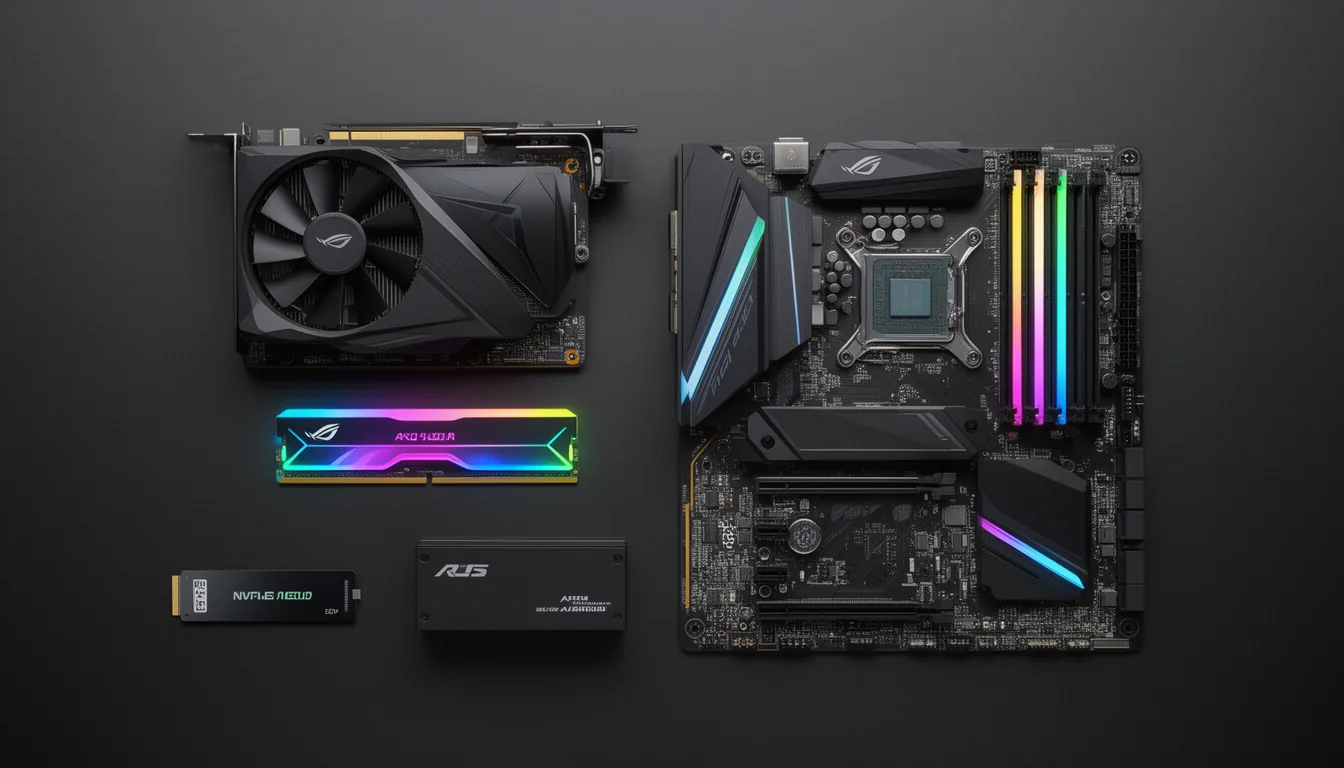
A $1,500 budget is the most popular gaming-PC price point - and the one the 2026 shortage has changed the most. This is the honest version: a compatibility-checked build sized to fit this bracket, what each part is doing, where you can cut to hit a hard $1,500, and whether a prebuilt beats it this year. We do not print part prices - they move weekly and any number here would be stale before you read it - so check the live listing on each part.
The 2026 price reality (read this first)
One fact reframes this entire budget: an AI-driven memory shortage has re-priced RAM, SSDs and GPUs upward, and it is structural rather than a passing spike. A 32GB DDR5 kit costs multiples of what it did in early 2025, and the same build costs materially more than a year ago. In practical terms every budget buys about one GPU tier less than the same dollars did a year ago - and RAM and storage capacity are where builders now trim to hit a number. So plan around the parts, not around last year's numbers, and check the live listing for each one before you commit.
The build
| Part | Pick | Why |
|---|---|---|
| CPU | AMD Ryzen 5 7600 | Cheapest current-gen AM5 gaming CPU; clean upgrade path to an X3D chip later. |
| CPU cooler | Thermalright Peerless Assassin 120 SE | The value-cooler standard - quieter and cooler than stock. |
| Motherboard | MSI B650 Gaming Plus WiFi | Solid VRM, WiFi, one-click EXPO; the cheapest reliable B650. |
| RAM | G.Skill Flare X5 32GB (2x16) DDR5-6000 CL30 | AMD's 1:1 sweet spot. The single biggest budget line in 2026 - the price spike hits here hardest. |
| GPU | AMD RX 9060 XT 16GB | Best-value 1440p raster; the 16GB avoids the 1440p 8GB-VRAM cliff. |
| SSD | WD Blue SN5000 1TB (Gen4 NVMe) | Gen4 is plenty for gaming; 1TB floor. Currently-supported (not Crucial). |
| PSU | Corsair RM650e (650W 80+ Gold, ATX 3.1) | Gold-rated with the native 12V-2x6 connector and generous headroom. |
| Case | Montech AIR 903 | High-airflow mesh, includes fans, clears the GPU. |
Matched monitor: 1080p 144-180Hz IPS, or a 1440p 144Hz IPS (guide). Compatibility: AM5 CPU on an AM5 (B650) board; DDR5 EXPO; PSU 650W covers 1.5x(160W GPU + 65W CPU) = ~338W with huge margin; the 155mm air cooler and typical dual-fan 9060 XT cards clear the AIR 903 - lengths vary by AIB, so check your specific card.
Note: On a tighter cap? Dropping to 16GB (2x8) is the cheapest meaningful cut, but 32GB is our house standard given the 8GB-VRAM/RAM interaction - so 32GB is the default here.
Where your $1,500 goes
A good gaming build weights the budget toward the GPU, then memory - not evenly across parts. Here is how this build actually splits, as shares of the total rather than amounts:
Share of the build's cost, not dollars - the split is what matters, and it stays true as street prices move. The GPU and RAM together are more than half the build; that is the correct 2026 priority.
The GPU and its modest power needs
A quiet advantage of an efficient 16GB card like the RX 9060 XT is how little power it needs - which keeps the whole build cheaper (a smaller PSU) and cooler. It draws far less than the halo cards, so a quality 650W supply has ample headroom. Manufacturer- recommended PSU across the current stack, with this build's card highlighted:
Source: SilverStone official GPU power-supply support list (TGP in each bar's note). The RX 9060 XT (highlighted) is the most power-efficient here - a big reason it fits a tight budget.
Build or buy a prebuilt in 2026?
Our honest 2026 verdict at this tier: check a prebuilt first. This is the budget where the shortage most often flips the math - big system builders locked in pre-spike memory, so a prebuilt with 32GB DDR5 and a comparable GPU can occasionally undercut the same parts bought individually today.
Before you buy a prebuilt, verify four things: the PSU is a known 80+ unit with real wattage headroom, the RAM is dual-channel (2 sticks, not 1) with its EXPO/XMP profile enabled, there is a free M.2 slot for a later SSD, and the warranty terms. If those check out and it is cheaper this week, there is no shame in buying - a DIY build wins on part quality and a clean upgrade path, not always on price in 2026.
Tune this build to your exact budget
Want to see what a slightly higher or lower number buys? Our PC build configurator starts at this $1,500 tier and lets you drag the budget and swap any part - it always returns a compatible, correctly-powered build that stays under your number.
Open the $1,500 build in the configurator →
Frequently asked questions
Can you build a good gaming PC for $1,500 in 2026?
Yes - but be honest about what $1,500 buys now. The AI-driven RAM/SSD/GPU shortage has re-priced memory, storage and graphics upward, so every budget buys roughly one GPU tier less than it used to. Our entry build fits this bracket with a 16GB RX 9060 XT, a Ryzen 5, 32GB of DDR5 and a Gen4 SSD - a genuinely strong 1080p-ultra and entry-1440p machine. If your $1,500 ceiling is hard, dropping to a 16GB (2x8) RAM kit is the cheapest meaningful cut; we default to 32GB because it is the safer 2026 buy. Check the live listings for what each part costs today.
Is 16GB or 32GB of RAM enough for a $1,500 build?
16GB still runs most games in 2026 and is a legitimate way to hit a hard $1,500 budget while RAM is this expensive. But 32GB is the recommended target for headroom, newer AAA titles and streaming - and it matters more when paired with a GPU that leans on system RAM. Our build ships 32GB; if your budget is immovable, 16GB is the honest place to cut.
Is an 8GB-VRAM graphics card enough at this budget?
It is a compromise we avoid. 8GB cards hit a VRAM wall at 1440p and even in some 1080p titles with high-res textures, forcing stutter. That is why this build uses the 16GB RX 9060 XT rather than a cheaper 8GB card - 16GB is the comfortable longevity choice. See our full breakdown in is 8GB of VRAM enough in 2026?
Is it cheaper to buy a prebuilt gaming PC than build one at $1,500 in 2026?
At this tier, sometimes yes - and that genuinely reverses decades of DIY advice. Large system builders bought memory in bulk before the 2026 spike, so a prebuilt with 32GB DDR5 and a comparable GPU can occasionally undercut the same parts bought individually today. The catch: prebuilts often use proprietary motherboards and just-enough power supplies that limit later upgrades. Our advice - price a prebuilt at your tier before buying, but if you value part quality and a clean upgrade path, build.
What resolution and frame rate does a $1,500 gaming PC hit in 2026?
This build targets 1080p at ultra with high frame rates (well over 100fps in most titles) and handles 1440p high with a little upscaling (FSR 4 / DLSS 4). It is not a 4K machine - that starts around the $3,000 tier. If 1440p high-refresh is your goal, the ~$2,000 build steps up to an RX 9070 XT.
Should I wait for prices to drop before building?
The industry consensus (TrendForce, IDC) is that the memory shortage is structural and prices stay elevated through 2027, with possible relief only around 2028. Waiting is largely a bet against an ongoing shortage - if you need the machine now, buying the capacity you need today is usually cheaper than upgrading later at a higher price.
Next steps
- Stretching to 1440p high-refresh? See the best gaming PC under $2,000.
- The full tiered lineup with all four budgets: best gaming PC builds 2026.
- Match a screen to this build: 144Hz vs 240Hz vs 360Hz.
Sources & method
Part selection and mid-2026 street prices are from a build-research pass across independent outlets (GamersNexus, Tom's Hardware, Hardware Unboxed) and current retailer listings; PSU wattages follow SilverStone's official GPU power-supply guidance. The 2026 memory-shortage figures are from TrendForce/IDC analysis via PCWorld and Tom's Hardware, and the Crucial/Micron consumer exit from Tom's Hardware and Reuters (announced December 2025). We do not claim to have bench-tested every part; performance figures are sourced from independent labs and manufacturer data. Every build is compatibility-checked at curation time. Last verified July 2026.
Related buyer's guides
All reviews →Buyer's guide / PC builds
Best gaming PC under $2,000 in 2026
The value sweet spot: near-flagship 1440p gaming built around the RX 9070 XT and an X3D CPU — with the honest 2026 total, budget allocation, and exactly how to duck under a hard $2,000.
See the build →
Buyer's guide / PC builds
Best gaming PC under $3,000 in 2026
Where 4K becomes real: the fastest gaming CPU paired with an RTX 5080 for 1440p-max and 4K-high with DLSS 4 — the honest shortage-adjusted total, where every dollar goes, and a matched monitor.
See the build →
Buyer's guide / PC builds
Best gaming PC under $5,000 in 2026
The honest high-end build: a fully-maxed RTX 5080 creator-gaming machine with a 16-core 9950X3D, 64GB and 4TB — plus the truth about why this bracket does not reliably buy a 5090 in 2026.
See the build →
Tool / PC builds
PC build configurator: build a custom PC by budget
A free PC builder / computer configurator: enter a budget and get a balanced, compatible AMD or Intel gaming PC that never goes over it - swap any part with Change and it stays under budget. Instant, no sign-up.
Use the tool →
Buyer's guide / PC builds
Best gaming PC builds in 2026: honest parts lists by budget
Four compatibility-checked builds from a 1440p-value rig to a no-compromise 4K machine - with the real core-hardware cost after 2026's price spike, why we won't recommend discontinued Crucial parts, an honest build-vs-buy call, and the monitor to pair with each.
See the builds →
Buyer's guide / AI PCs
LLM VRAM calculator
Enter a model size, quantization and context length to estimate the VRAM or unified memory an LLM needs to run locally — and instantly see which 2026 machines can hold it.
Use the calculator →