Buyer's guide / PC builds
Best gaming PC under $5,000 in 2026
The honest high-end build: a fully-maxed RTX 5080 machine that doubles as a creator workstation - and the truth about why $5,000 does not reliably buy a 5090 in 2026.
By Evan Cole · Last updated July 18, 2026
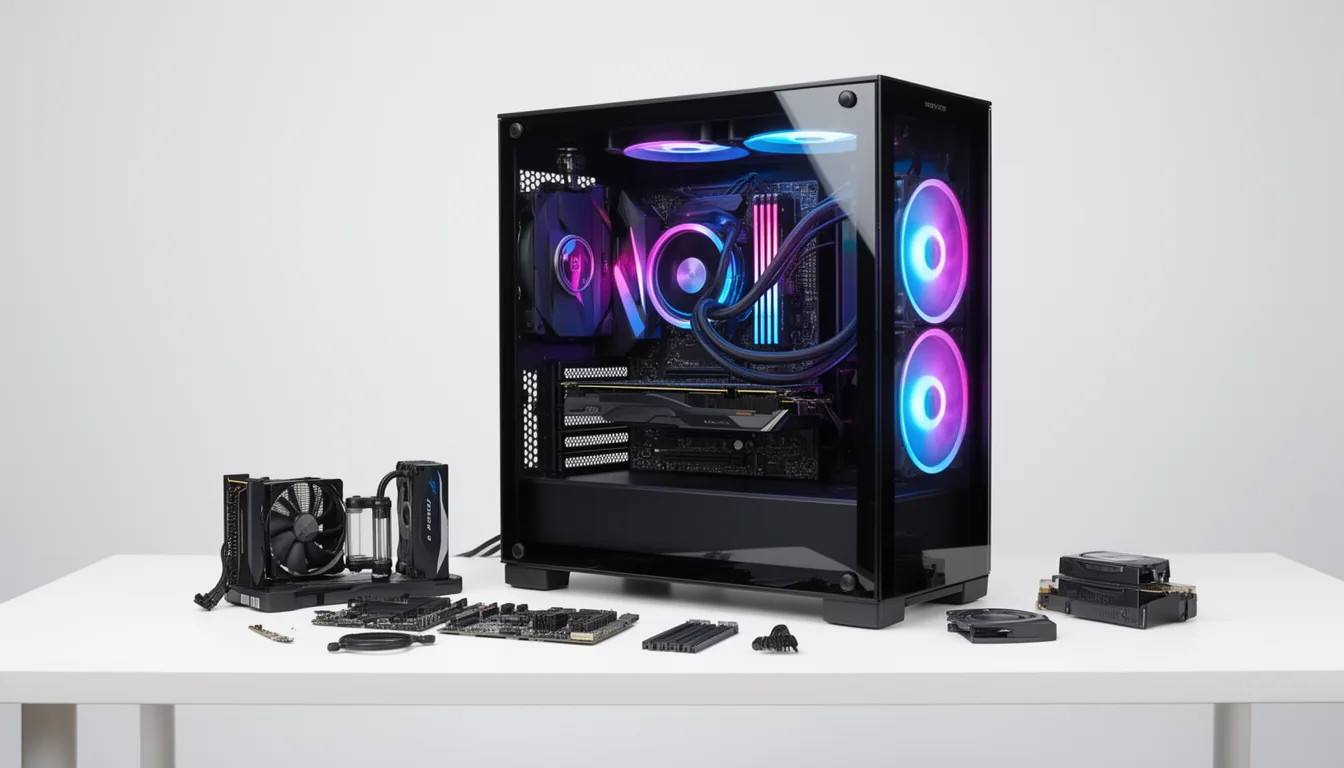
Here is the honest version of a $5,000 build that most 2026 guides avoid: at today's street prices, $5,000 does not reliably buy an RTX 5090 machine - the card alone can eat most of it. What it does buy, brilliantly, is a fully-maxed RTX 5080 build sized to fit inside this bracket that also works as a serious creator workstation - and still leaves room for a great monitor and peripherals. Below: that build, where every dollar goes, and exactly what a real 5090 system costs instead.
The 5090 reality check. The RTX 5090 sells well above its launch MSRP on the street in 2026. A complete, balanced 5090 build lands above this bracket - see our halo build. So a true 5090 rig is a $5,000-plus proposition, not a $5,000 one. If you can catch a 5090 near MSRP, take it; otherwise the maxed 5080 below is the smarter $5,000.
The 2026 price reality (read this first)
An AI-driven memory and GPU shortage has re-priced components upward through 2026, and it is structural rather than temporary. It hits hardest exactly at this tier: 64GB of DDR5 and the RTX 5090 are among the most shortage-inflated parts on the market. That is why the honest $5,000 strategy is to buy a 5080 - which is barely affected relative to the 5090's premium - and spend the savings on cores, memory and storage you will actually use, rather than overpaying two-to-three times for a 5090 this year.
The honest $5,000 build: a maxed RTX 5080
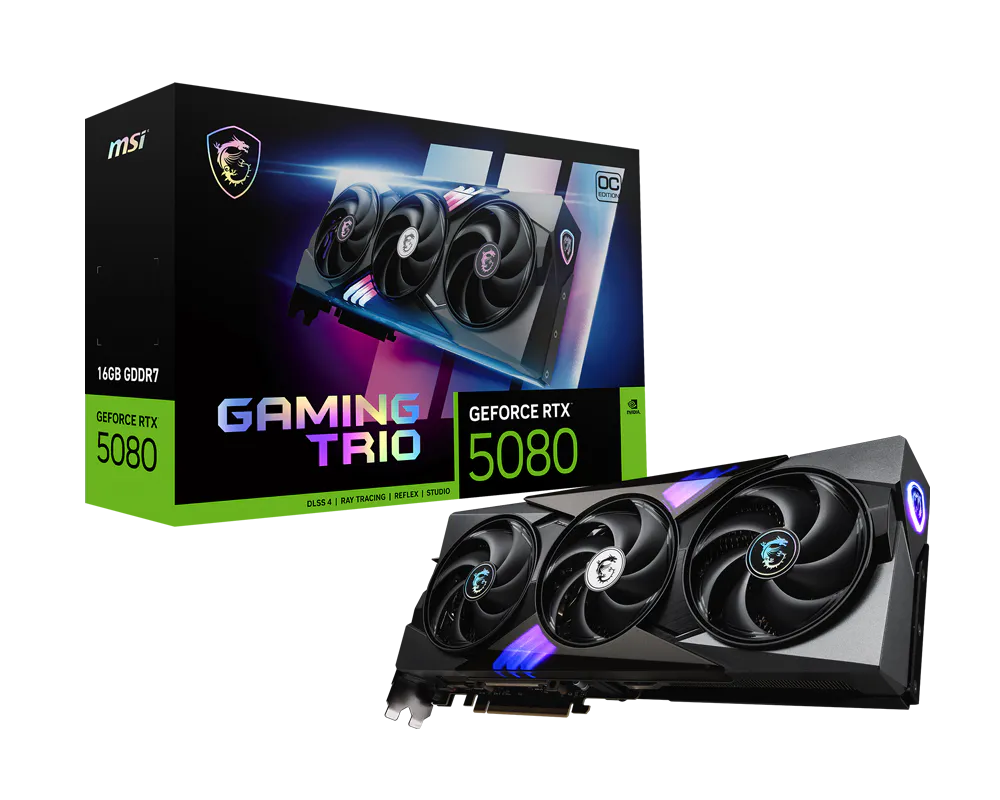
A fully-loaded RTX 5080 creator-gaming build - specced to land inside the $5,000 bracket with room left for a monitor and peripherals.
| Part | Pick | Why |
|---|---|---|
| CPU | AMD Ryzen 9 9950X3D | Elite gaming plus heavy multicore; overkill for pure 4K gaming (see note). |
| CPU cooler | Arctic Liquid Freezer III 420 (420mm AIO) | Needed to keep the 170W 16-core in check. |
| Motherboard | ASUS TUF Gaming X670E-Plus WiFi | PCIe 5.0 for GPU and SSD, with a robust VRM. |
| RAM | G.Skill Trident Z5 Neo 64GB (2x32) DDR5-6000 CL30 | 64GB for 4K plus content work; two sticks for AM5 stability. Brutally volatile in 2026. |
| GPU | NVIDIA RTX 5080 | Top-tier 1440p and strong 4K, with DLSS 4 multi-frame gen. |
| SSD | WD Black SN850X 4TB (Gen4 NVMe) | 4TB library capacity. Gen4 is plenty; not Crucial. |
| PSU | Corsair RM850e (850W 80+ Gold, ATX 3.1) | NVIDIA's recommended 850W for the 5080, native 12V-2x6. |
| Case | Lian Li Lancool 216 | High airflow that clears the 3-slot 5080. |
Matched monitor: 1440p 240Hz OLED, or a 4K 144Hz panel (guide). Compatibility: AM5 on X670E; DDR5 EXPO (verify a 2x32 6000 CL30 kit on the board QVL); 850W covers 1.5x(360W 5080 + 170W 9950X3D) = ~795W; a 420mm AIO and a 3-slot 5080 fit a large airflow case - verify your specific card length.
Where your $5,000 goes
Notice how different this split is from a pure gaming build: the GPU still leads, but 64GB of RAM and a 16-core CPU take a large share because this is a gaming-plus-creator machine. Here is the split, as shares of the total rather than amounts:
Derived from the curation costs behind the table above, shown as shares rather than amounts. If you game only, the high-end $3,000 build with 32GB and an 8-core 9800X3D games identically - the extra spend here buys productivity.
What a real RTX 5090 build costs instead
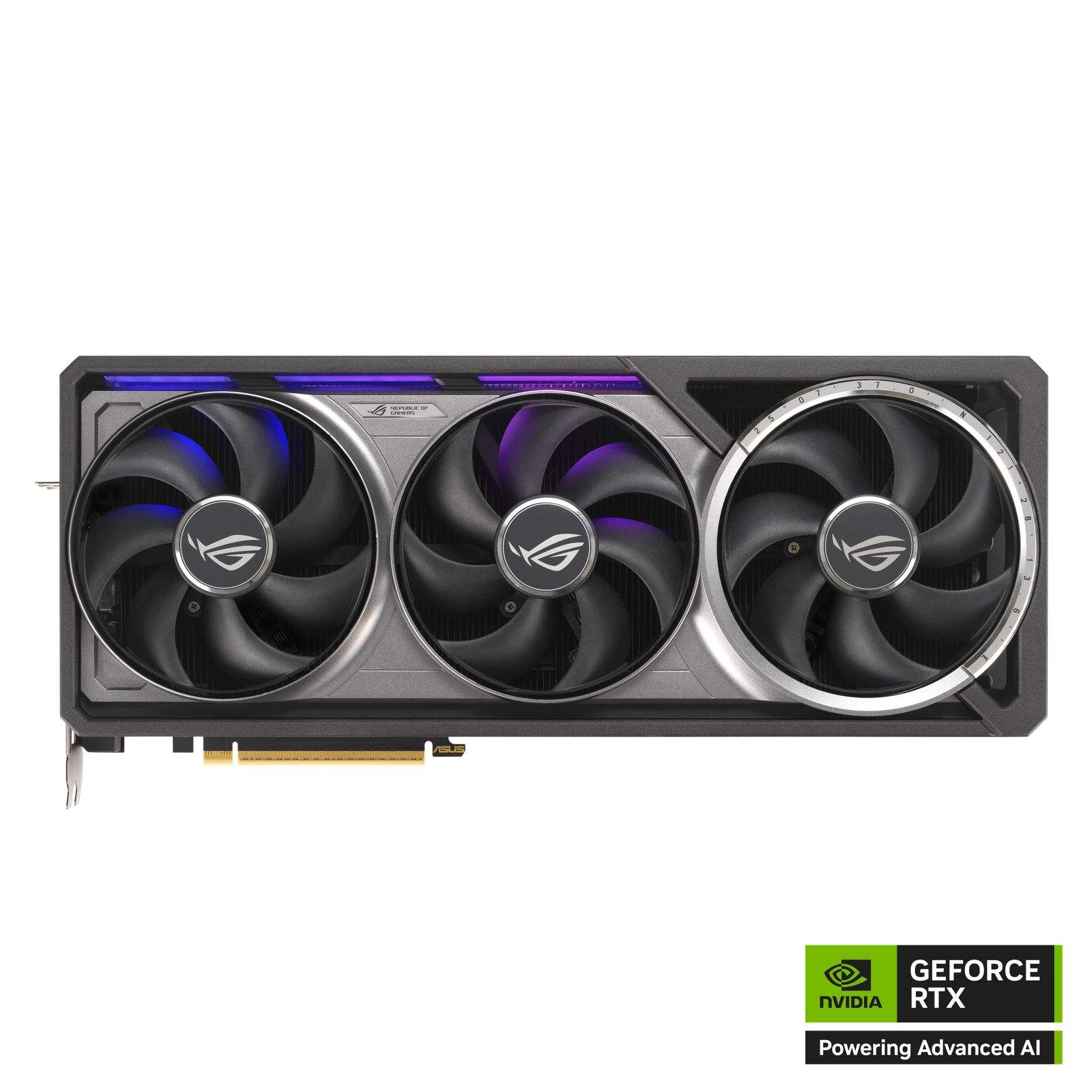
If 4K-native-max and high-refresh 4K are the goal and you accept the 2026 premium, the 5090 is the only card that delivers it. But price it honestly - a complete, balanced 5090 build with the 16-core CPU, 64GB and a 1200W PSU lands above this bracket:
| Part | Pick | Why |
|---|---|---|
| CPU | AMD Ryzen 9 9950X3D | Elite gaming plus heavy multicore; overkill for pure 4K gaming (see note). |
| CPU cooler | Arctic Liquid Freezer III 420 (420mm AIO) | Needed to keep the 170W 16-core in check. |
| Motherboard | ASUS ROG Strix X870E-E Gaming WiFi | Best VRM, PCIe 5.0 x16 + Gen5 SSD, USB4. |
| RAM | G.Skill Trident Z5 Neo 64GB (2x32) DDR5-6000 CL30 | 64GB for 4K plus content work; two sticks for AM5 stability. Brutally volatile in 2026. |
| GPU | NVIDIA RTX 5090 | The only true 4K-max, high-refresh card. Street-inflated and low stock in 2026. |
| SSD | WD Black SN850X 4TB (Gen4 NVMe) | 4TB library capacity. Gen4 is plenty; not Crucial. |
| PSU | Corsair HX1200i (1200W 80+ Platinum, ATX 3.1) | Covers the 5090's transient spikes with headroom, native 600W 12V-2x6. |
| Case | Lian Li O11 Dynamic EVO XL | Fits a 420mm AIO and a 350mm+ 5090. |
Matched monitor: 4K 240Hz OLED (guide). Compatibility: AM5 on X670E/X870E; DDR5 EXPO (verify 6000 CL30 on a 2x32 kit against the board QVL); PSU 1200W covers 1.5x(575W + 170W) = ~1,118W and the 5090's transient spikes (NVIDIA min is 1000W); typical 330-360mm AIB 5090 cards fit the O11 EVO XL - lengths vary by model, so verify your specific card.
Note: For pure 4K gaming this is over-built on the CPU/RAM: stepping down to a Ryzen 7 9800X3D and 32GB takes a substantial bite out of the total with essentially no 4K-gaming loss, because 4K is GPU-bound. The 9950X3D + 64GB only pays off if you also do heavy multicore/creative work.
The 5090 also changes your power budget: it wants a 1000W-class supply minimum (vs 850W for the 5080), which is why the halo build steps up to 1200W. The manufacturer- recommended PSU across the stack, with the two cards this page weighs highlighted:
Source: SilverStone official GPU power-supply support list (TGP in each bar's note). The 5090 (1000W min) needs a meaningfully bigger supply than the 5080 (850W).
That is our halo build - genuinely no-compromise, but a machine above this bracket at 2026 street prices, not inside it.
Build or buy a prebuilt in 2026?
Our honest 2026 verdict at this tier: build. At $5,000 you are paying for cooling, a strong board and a correctly-sized PSU that prebuilts at this price routinely economize - and DIY lets you put the money into the 5080-plus-cores-plus-RAM balance rather than a headline 5090 with a weak supporting cast.
The one case for a prebuilt is a genuine 5090 system sold near MSRP - big builders occasionally have stock the open market does not. If you find one, verify the PSU is a 1000W-class known unit, cooling is adequate for a 5090's transients, the RAM is dual-channel with EXPO, and the board and case allow upgrades.
Tune this build to your exact budget
Want to see exactly what a $5,000 ceiling assembles? Our PC build configurator opens at this budget and returns the best compatible, correctly-powered build that stays under your number - swap any part and it re-balances.
Open the $5,000 build in the configurator →
Frequently asked questions
Can you build a 5090 gaming PC for under $5,000 in 2026?
Usually not, and this is the honest part most guides skip. The RTX 5090 carries a high launch MSRP and sells well above it on the street in 2026, so the card alone can eat most of this budget. A complete, well-balanced 5090 build sits above the $5,000 bracket at 2026 street prices. Under a hard $5,000, the smart machine is a fully-maxed RTX 5080 build, which leaves headroom for a great monitor and peripherals. Only chase a 5090 at this budget if you can catch one near MSRP - check the live listing.
What is the best gaming PC you can build for $5,000 in 2026?
A fully-loaded RTX 5080 system: the 5080 paired with a 16-core Ryzen 9 9950X3D, 64GB of DDR5-6000, a 4TB Gen4 SSD and a 420mm AIO, specced to fit inside this bracket. It maxes 1440p, plays 4K high with DLSS 4, and doubles as a serious content-creation and streaming workstation thanks to the 16 cores and 64GB. It is the honest $5,000 pick because it spends every dollar on capability you will actually use, rather than overpaying for a street-inflated 5090.
Is an RTX 5080 or RTX 5090 better value in 2026?
At 2026 street prices the 5080 is the far better value. The 5090 is genuinely faster for 4K-native max settings and high-refresh 4K, but it costs roughly two to three times the 5080 right now because of the memory/GPU shortage and low stock. Unless you specifically need 4K-native-max or do professional GPU-accelerated work, a maxed 5080 build delivers more real-world capability per dollar - including the CPU cores and RAM the saved money buys.
Do I need 64GB of RAM and a 16-core CPU for gaming?
Not for pure gaming - 32GB and an 8-core 9800X3D game just as well. We include 64GB and the 16-core 9950X3D here because at the $5,000 tier this build is explicitly a gaming-plus-creator machine: video editing, 3D, large compiles and heavy multitasking all benefit. If you game only, take the high-end $3,000 build and pocket the difference; the extra spend here buys productivity, not frames.
What PSU and cooling does a maxed RTX 5080 build need?
An 850W 80+ Gold ATX 3.1 supply covers the 5080 (360W) plus the 9950X3D (170W) with headroom - 1.5x their combined draw is about 795W. The 16-core CPU needs strong cooling, so we use a 420mm AIO. If you instead build around a 5090, step up to a 1000W-class PSU (NVIDIA's minimum for the 5090) - see our halo build.
Should I wait for the RTX 5090 to come down in price?
Do not count on it soon. The shortage driving GPU and memory prices is structural, and there is no desktop RTX 50 Super refresh in 2026 because adding VRAM is uneconomical during the crunch; analysts expect elevated prices through 2027. If you want a 5090, hunt for one near MSRP rather than waiting for a broad correction - and if it does not appear, a maxed 5080 build is the better use of $5,000 today.
Next steps
- Gaming-only at a lower price? The best gaming PC under $3,000 games identically.
- The full tiered lineup, including the 5090 halo build: best gaming PC builds 2026.
- Match a 4K screen: 1440p vs 4K gaming and OLED vs IPS.
Sources & method
Part selection and mid-2026 street prices are from a build-research pass across independent outlets (GamersNexus, Tom's Hardware, Hardware Unboxed) and current retailer listings; RTX 5090 street pricing relative to its $1,999 MSRP is from GPU price trackers (TechSpot, VideoCardz), and PSU wattages follow NVIDIA and SilverStone guidance. The 2026 memory/GPU-shortage figures are from TrendForce/IDC analysis via PCWorld and Tom's Hardware. We do not claim to have bench-tested every part; performance figures are sourced from independent labs and manufacturer data. Every build is compatibility-checked at curation time. We do not print part prices - the dollar figures here are budget brackets and launch MSRPs. Last verified July 2026.
Related buyer's guides
All reviews →Tool / PC builds
PC build configurator: build a custom PC by budget
A free PC builder / computer configurator: enter a budget and get a balanced, compatible AMD or Intel gaming PC that never goes over it - swap any part with Change and it stays under budget. Instant, no sign-up.
Use the tool →
Buyer's guide / PC builds
Best gaming PC builds in 2026: honest parts lists by budget
Four compatibility-checked builds from a 1440p-value rig to a no-compromise 4K machine - with the real core-hardware cost after 2026's price spike, why we won't recommend discontinued Crucial parts, an honest build-vs-buy call, and the monitor to pair with each.
See the builds →
Buyer's guide / PC builds
Best gaming PC under $1,500 in 2026
The honest $1,500 build: a 16GB RX 9060 XT, Ryzen 5 and 32GB DDR5 for strong 1080p-ultra and entry-1440p gaming — with the real shortage-adjusted total, where every dollar goes, and whether a prebuilt beats it this year.
See the build →
Buyer's guide / PC builds
Best gaming PC under $2,000 in 2026
The value sweet spot: near-flagship 1440p gaming built around the RX 9070 XT and an X3D CPU — with the honest 2026 total, budget allocation, and exactly how to duck under a hard $2,000.
See the build →
Buyer's guide / PC builds
Best gaming PC under $3,000 in 2026
Where 4K becomes real: the fastest gaming CPU paired with an RTX 5080 for 1440p-max and 4K-high with DLSS 4 — the honest shortage-adjusted total, where every dollar goes, and a matched monitor.
See the build →
Buyer's guide / 3D rendering
Best GPU for Blender & 3D rendering (2026)
Ranked on cited Blender Open Data scores, not rounded guesses: why OptiX makes NVIDIA the default for Cycles, how much VRAM your scenes actually need, Eevee vs Cycles, and a value pick from a budget RTX 3060 to a 32GB RTX 5090.
6 picks →